Athleisure isn't a trend, it's how people dress. But the leader is under pressure: lululemon is shrinking in its home market while Alo Yoga keeps opening stores and is talked about as an IPO candidate.
By Marcel Melzig · First published 28 February 2025 · Updated 8 November 2026
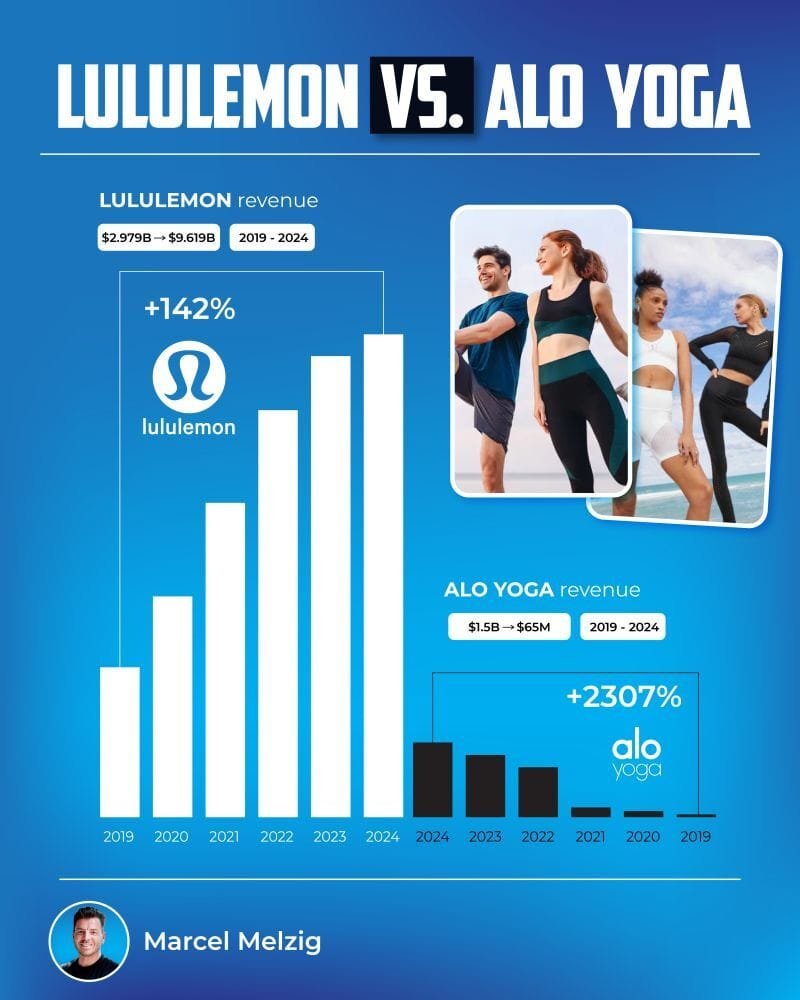
lululemon revenue and Alo Yoga in numbers. Chart: Marcel Melzig. Sources: lululemon, SGI Europe, Forbes.
Short answer: lululemon is still far bigger: revenue was $11.1 billion in fiscal 2025 (+5%), and it expects $10.35 to $10.5 billion for fiscal 2026, a decline of 5 to 7%. Alo Yoga is private and publishes no figures; estimates put its revenue at about $1.5 billion in 2024, up from about $65 million in 2019, roughly 23-fold. The momentum is with Alo; the scale is with lululemon.
$11.1bnlululemon revenue, FY2025
−8%lululemon Americas, Q2 2026
+5%lululemon Rest of World, Q2 2026
811 vs. 150+Stores: lululemon vs. Alo
Head to head
lululemon
Alo Yoga
Revenue
$11.1bn (fiscal 2025, reported)
about $1.5bn in 2024, up from about $65m in 2019 (estimates; Alo publishes no figures). Forbes estimated close to $2bn for the parent company incl. Bella+Canvas (2025)
Growth
+5% in fiscal 2025; outlook 2026: −5 to −7%
about 23-fold 2019–2024 (estimate); roughly tenfold since 2020 (Forbes)
Stores
811 company-operated (Feb 2026), +44 in a year
150+ worldwide, from fewer than 12 in early 2023
Ownership
listed on Nasdaq
private; IPO or sale under consideration (Reuters, June 2026)
Valuation
market value changes daily
deal talks at roughly $10bn in 2023 (Reuters)
lululemon: growth abroad, pressure at home
Period
Revenue
Change
Regions
Fiscal 2025 (to 1 Feb 2026)
$11.1bn
+5%
Americas −1%, China Mainland +29%, Rest of World +16%
Q2 fiscal 2026 (May–Aug 2026)
$2.4bn
−4%
Americas −8%, China Mainland +4%, Rest of World +5%
Fiscal 2026 outlook
$10.35–10.5bn
−5 to −7%
cut in September 2026
The pattern is clear: lululemon's growth now comes from outside the Americas, and even China has slowed sharply. Comparable sales fell 9% in Q2 2026, 12% in the Americas. In the category it created, lululemon is losing ground at home.
Alo Yoga: the challenger
Alo does not publish figures, so any revenue number for Alo alone is an estimate. What is reported:
Forbes (April 2025) estimated sales of Alo's parent Color Image Apparel at close to $2 billion, including Bella+Canvas, and roughly tenfold growth for Alo since 2020.
The Bella+Canvas business was sold in May 2026. Analysts and advisers see that as a step towards an IPO or sale; the founders have not confirmed plans.
Alo went from fewer than a dozen stores in early 2023 to more than 150 worldwide.
Europe: nine stores in the UK, a tenth opening in Edinburgh in November 2026, a London flagship on King's Road since 2023 and a Paris flagship on the Champs-Élysées announced in 2025.
Why Alo is winning attention
lululemon built athleisure on product and community. Alo built it on content and status: the studio-to-street look, worn by creators and celebrities, sold in big flagships in the best streets. That makes Alo the brand of the moment, especially with younger customers. lululemon's answer has to come from product newness and international growth.
What it means for brands and retailers
Growth has moved abroad. lululemon's growth now comes from outside the Americas (China Mainland +29%, Rest of World +16% in fiscal 2025), and Alo is building flagships in London and Paris.
Premium athleisure is a store game. Both brands grow through their own stores, not wholesale. For multi-brand retailers that means limited access.
Watch the IPO. If Alo goes public, it will publish real numbers for the first time, and this comparison can finally be made on hard data.
Correction: The February 2025 version of this article contained two errors in the Alo figures: "$1.5 billion million" and a growth of "+2,307%". Growth from about $65 million to about $1.5 billion is roughly 23-fold, or about +2,200%. All Alo revenue figures are estimates; Alo does not publish results.